

There are few wrestlers who can draw you in as immediately as the Deathmatch Queen as she strolls to the ring with grace and violent intention; decked out in her azure robe and hakama, expression shielded by her traditional mask, wielding a kendo stick she knows how to use better than anyone else.
With her retirement on the horizon, her mark on the joshi landscape over her 13-year career is inarguable. But to appreciate the impact she has had on the scene – and how she may still impact it in the future – you have to take a look at the whole picture. Because Risa Sera didn’t just earn the nickname of the Deathmatch Queen, she built the monarchy with her own two hands.
The moment Risa Sera laid eyes on deathmatch wrestling, it spoke to her in a way that would change the course of her career, casting a bloodstained shadow over everything she did. Originally, Sera went to Big Japan Pro Wrestling just to help with ticket sales, but the flashy nature of the subgenre stirred something in her.
It was a big leap for someone who never originally set out to enter the world of pro wrestling. When Sera made the journey to Tokyo from her hometown of Sera, Hiroshima, she did so with the grand vision of becoming a voice actress. She stumbled into the wild world of wrestling wholly by accident when she scored a role in the movie Taiyo Kara Plancha.
In this movie about joshi wrestling and a photographer who fell in love with the art, Sera would be cast alongside the likes of Sareee, Tsukasa Fujimoto, Hikaru Shida, and Miyako Matsumoto to fulfil the roles of the onscreen grapplers. It was a role that came with a very specific requirement: Risa would have to train and debut as a wrestler.
It wasn’t something that came easy to her at first. By her own admission in an interview with Encount Press she was so unathletic she struggled to even do a forward roll when she first started training. However, she stuck at, learning to enjoy herself as she grew more comfortable. Her debut match came, and despite the pain she realised how much fun pro wrestling could be.
What had started out as a movie role would become her all-consuming career and passion.
Risa spent her first few years in wrestling as many newcomers do, learning the ropes and taking in everything she could from her seniors. She was soon paired up with Maki Narumiya, a move that would lead to tag team gold before the end of her sophomore year – a record breaking run with the International Ribbon Tag Team Championship that still stands to this day.
It was around the end of that championship run that Risa Sera’s real passion would reveal itself at that fateful BJW show. It was an obsession that would not be shared with the Ice Ribbon promotion she called home however.
Given their more family-friendly image, the thought of injecting light tubes, deathmatches, and copious amounts of blood went against what they were all about. The thought of introducing such violence, especially to women’s wrestling, was something they couldn’t get on board with.
Still, Risa Sera’s mind was made up – even her own mother couldn’t talk her out of it. The resistance from those around her only seemed to spur her on even more.
“Since the me of that time didn’t really have the confidence to stand up after getting beaten up with fluorescent lamps, I decided that establishing myself as a wrestler who says “I want to reach that far no matter what” was my goal. Because (pro wrestling) may be looked down as an “actress’-odd-job-at-best” thing, I didn’t wanting to be underestimated.
Besides, I can say with confidence that it’s absolutely sickening the idea that you can do death match if you’re a man but it’s impossible if you’re a woman. That is not gender equality, right? Even when I was doing Kendo, I believed I could defeat all the boys from the dojo, I didn’t felt like losing even after entering high school!”
Tsuyokawa Women’s Professional Wrestler Forefront 2018
published in “Weekly Playboy” No. 16 (released on April 2). English Translations by Amauri Edson & Davide Moretti
It would be an attitude that she would see continue for years, even as more women started to follow in her deathmatch footsteps. People started to accept wrestlers like her and Rina Yamashita going to war, but as the 18-year-old Suzu Suzuki began her deathmatch journey she saw judgemental criticism thrown her way. “You’re young, you’re small, you’re cute”. It’s been prejudices like these that Risa Sera and those who stand by her have been fighting to break.
If Ice Ribbon and its fans weren’t ready to jump straight into the bloodshed in 2015, Risa Sera would use her unique brand of creativity to warm them up.
And so, the ‘Human Hair Deathmatch’ was formed. No blood would be spilled, but fans would still have the chance to react as viscerally as if there was due to the unique nature of the stipulation. Calling upon memories of classic FMW wars, two boxes sat on either side of the ring – yet they wouldn’t explode. Packed inside was all of the hair they could collect from hair salons all over Saitama, Tokyo, and Kanagawa. Wrestlers would be thrown inside, have it glued across their bodies and generally assaulted with it.
To add to the fun, a large button was placed in the corner – another allusion to the FMW deathmatches – this time bringing up a randomiser on the big screen that would introduce various accessories to the match, including possible support wrestlers.
The match went over well enough with the skeptical Ice Ribbon fans and drew media attention due to the unique nature of the fight. Still, Sera had to fight even harder behind the scenes than she did in the ring to get more. There were some hardcore style matches, but it wouldn’t be until her produce show at the end of the year that she would really begin to reach further into the field during a 60-minute Iron Woman match, dubbed a ‘Four Seasons’ match.
This and the following two Iron Woman deathmatches at her produce shows were all about two things: helping the Ice Ribbon fans get comfortable with the idea of women bleeding (it is something they tend to do after all), and for Risa herself to prove she has the strength and resilience to get back up after taking all sorts of punishment.
Remember her goal from the moment she first saw deathmatch: “the me of that time didn’t really have the confidence to stand up after getting beaten up with fluorescent lamps, I decided that establishing myself as a wrestler who says, “I want to reach that far no matter what””. Those Iron Woman Deathmatches went a long way to proving that, while still featuring plenty of Sera’s unique brand of comedy to ease fans into the more brutal side of her growing persona.
It would be around this time that she would also go on to win the IcexInfinity Championship two times. Risa would continue to grow her all-around game, which featured a steady mix of striking, power moves, and technical acumen. For someone who couldn’t do a forward roll when she started out, Sera had evolved into a wrestler with a deep repertoire who could – more importantly – connect with fans with what made her truly unique. There would be the odd hardcore match or more violent showcase to be found peppered in through the following years, but just as much you’d see her more creative side shine through. She was earning her stripes through her natural ability rather than relying on gimmicks.
She also found herself a new tag partner in Maya Yukihi, a rookie who would find herself growing quickly under the guidance of Risa much in the same way Sera had under Narumiya. Together the duo would win the International Ribbon Tag Team Championships four times and became arguably the defining feature of Sera’s run through the latter half of the decade.
As successful as her partnership with Maya was, however, Sera would continue to be drawn to adding crimson to her azure palette. The two would drift apart, with Yukihi focusing on the Infinity title and her RebelxEnemy group, while Ice Ribbon would essentially build Sera her own little playground: The FanastICE Title.
Matches contested for this championship almost always had some kind of unique stipulation, and Risa’s creativity and penchant for violence shone through here. Whether it was a No Ropes Lumberjack match with Syuri, and Iron Woman hardcore match against 10 other people or a more traditional deathmatch against Akane Fujita, there was always a bit of extra spice thrown in throughout her 322-day reign, and more and more you could see Ice Ribbon allowing Sera the chance to wrestle the way she wanted.
Her reign ended in spectacularly bloody deathmatch classic inside Korakuen Hall against Rina Yamashita, who survived three Air Raid Crashes onto a stack of lighttubes that tore her back to shreds. At the conclusion of the match, instead of ending with Ice Ribbon’s sign off of “Be Happy With Pro Wrestling”, they ended with “Be Happy With Deathmatch”.
The FantastIce Title was essentially Ice Ribbon trying to meet her halfway, but it would seem that Risa Sera’s taste for blood could not be sated. She wanted more, and so she made the decision to leave and continue her path as a deathmatch wrestler.
Originally this was a path she was prepared to walk alone. However, the path Risa had forged for other women in the modern era was no longer a lonely one.
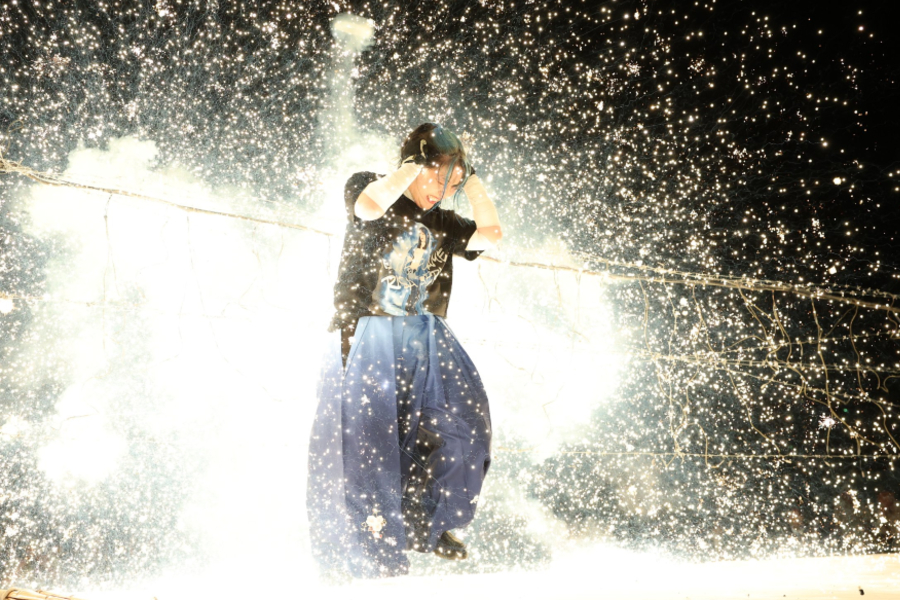
When it was announced that Risa Sera was leaving Ice Ribbon at the end of December 2021, Suzu Suzuki, Kurumi Hiiragi, Akane Fujita, and Mochi Miyagi all left alongside her, together setting up the deathmatch troupe Prominence.
Starting a niche deathmatch promotion while Japan was still under pandemic restrictions for live shows was always going to be an uphill battle, but Prominence carved out a comfortable niche; the wrestlers would go out and do their thing and then unite once a month in Shin-Kiba and go to war.
With the help of Sera’s long time mentor Takasaki Sasaki and FREEDOMS, they were even able to run Korakuen Hall for their first anniversary (even if at the end they had to say farewell to Suzu Suzuki, who would soon be moving on to STARDOM). It seemed that after many years, Risa was finally in a place in her professional career where she could truly be herself.
Prominence was never a long term plan for her though. Two years was the plan, enough to give everyone a platform, and then they could all go their separate ways. Sera too had been considering retirement on and off over the years. Yet despite her intentions to disband, the others convinced her to keep it alive. That’s how much the house that Sera built meant to them.
Sera has never been one to settle for easy. She left her hometown to chase her dreams in the big city of Tokyo. She chose to walk down the road of blood and light tubes when she was skillful enough to stick with traditional pro wrestling. She chose to strike it out on her own rather than stay under the banner of a sure thing.
Even as her body has continued to break down, she’d rather keep hobbling than stay down. Seeing the resilience of those men at the BJW show over a decade ago continue to stand despite everything they endured has seeped its way into every facet of her career.
Now, as she finally prepares to hang up the kendo stick for good, she prepares for arguably her most ambitious step yet.
While Risa Sera is retiring from in ring action, she isn’t leaving the industry entirely. In fact, she’s taking it back home with her. Her hometown of Sera, Hiroshima is one of many that faces the very real risk of becoming a relic of the past as Japan’s more rural townships fade away as young people leave for opportunities in the bigger cities.
There are many example of revitalisation projects across Japan designed with making these small regional areas a destination – primarily for younger people to want to come and live in but also in some cases rebuilding the areas to appeal to tourism. Higashikawa, Hokkaido and Kamiyama, Tokushima are two examples where dedicated campaigns and reframing can help breathe life into a dying town.
Risa Sera hopes that joshi can do the same with her hometown by attracting younger people to her town to participate, turning abandoned homes into training facilities and accommodation and expanding their agricultural and flower programs. If Sera, Hiroshima can become a micro-tourism destination through her vision, then it will become a unique hub in Japan while also providing young wrestlers a chance to become pro wrestlers without having to lock themselves into the bigger cities of Japan while they develop.
It’s an ambitious project, but one that could only come from the kind of wrestler whose first deathmatch was a ‘Human Hair Deathmatch’, and whose creativity and vision bled into every facet of her work. Someone who has helped raise up and inspire those around her regardless of the type of wrestling they were drawn towards.
Risa Sera was never your typical joshi, but that’s what made her special. It’s why even though she has been physically limited in her final year or two she will still prove irreplaceable when she retires on January 12.
The Deathmatch Queen has always been more than just her work inside the ring, and her greatest gift may still be yet to come.

 RESURA