

Mexico’s relationship with Japan dates back to the late 19th century, with not only diplomatic and trading agreements, but also mutual respect and fascination with each other’s cultures. Mexican exports to the Asian country include cooper, fruit, meat, and alcohol.
The Japanese have shown interest in Mexican culture for a number of years now, with the biggest example being how lucha libre has conquered Japan. Whenever a Japanese wrestler wants to prove themselves, an excursion to Mexico is almost mandatory and vice versa. Various luchadores have toured Japan across decades, with some of them even being more well-known in puroresu, like Mil Máscaras, Ricky Marvin, and Violento Jack. CMLL and New Japan Pro Wrestling promote a series of shows called “Fantasticamania”, with the intent of showcasing lucha Libre and puroresu to both Japanese and Mexican fans.
Of course, lots of women have also had runs in Japan, and we are going to see the most prominent examples of it.
The Prohibition
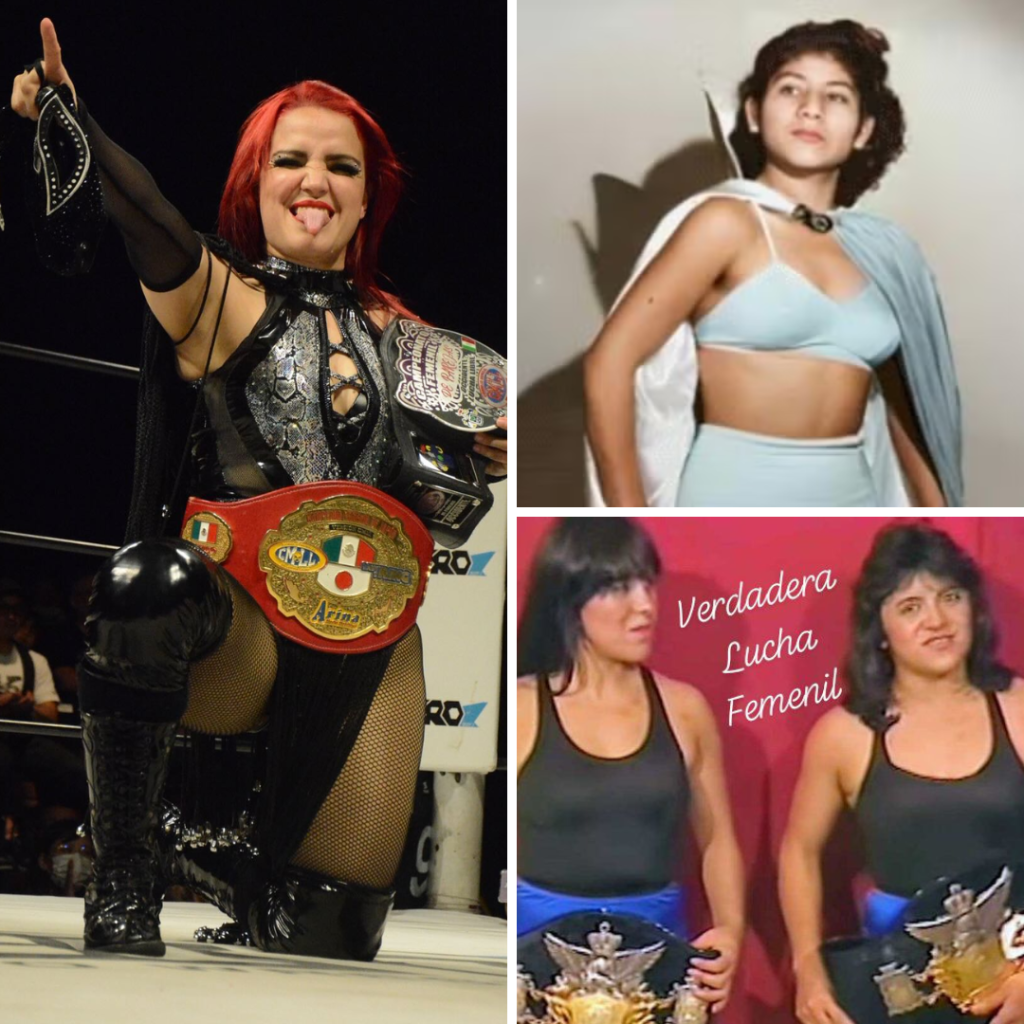
Something that many international lucha libre fans don’t know is that female wrestling was banned in Mexico City from 1954 to 1986, with only a few matches featuring women being booked outside the capital of the country. Although it wasn’t completely illegal, bookers weren’t willing to risk being fined. This led many women to seek opportunities elsewhere, whether being in other Mexican states or internationally.
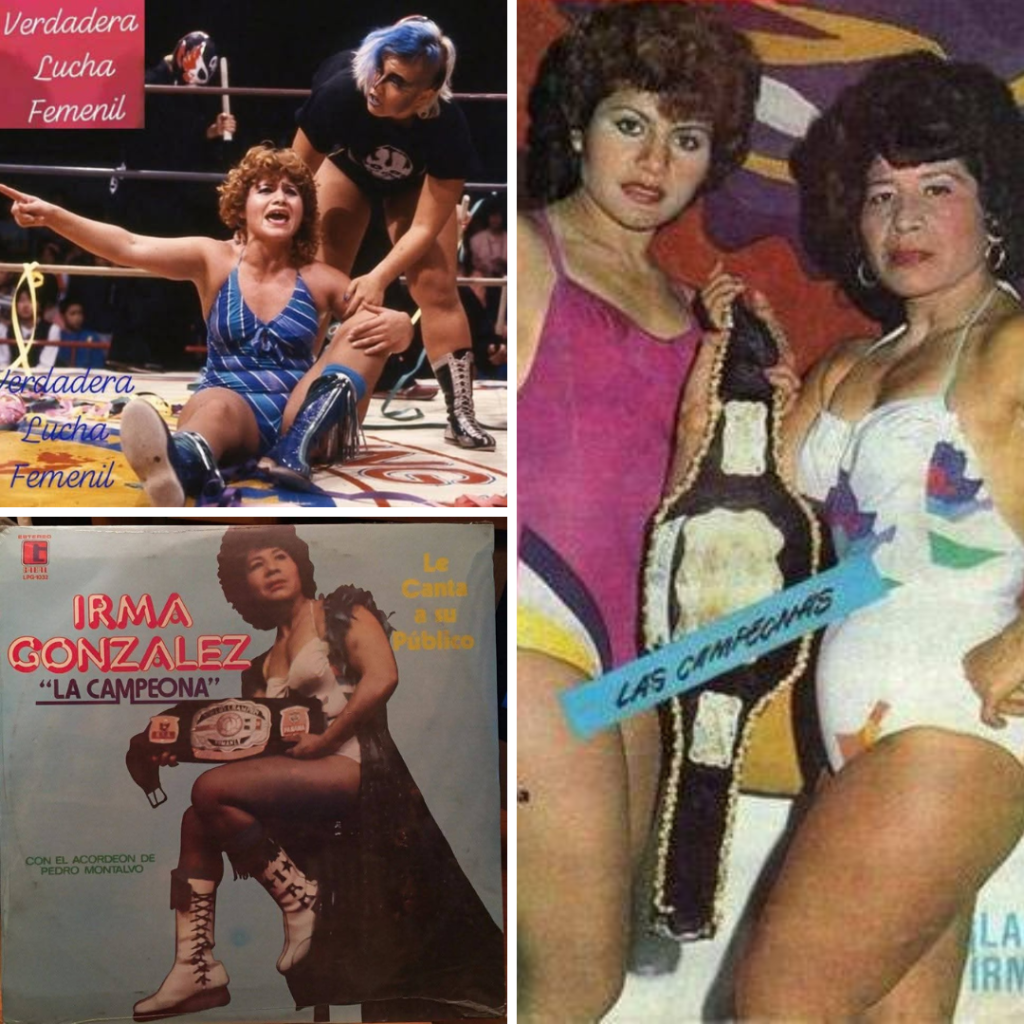
Mexico’s biggest representative during this time was non-other than Irma Gonzalez, who toured the world, captivating international audiences, especially Japan, where she was nicknamed “La Dulce Irma” (“Sweet Irma”). Without a doubt, one of the greatest legends in lucha libre, making Mexico proud worldwide. She would later be joined by her daughter Irma Aguilar, wrestling in Japan during the ’80s.
Cultural Exchange
Once the prohibition was lifted, luchadoras reappeared in bigger arenas in Mexico City, and just as joshi began touring in Mexico, Japan would feature women from Mexico in their shows.
In the early ’90s, The Moreno sisters (Esther and Cynthia), traveled to Japan to wrestle for All Japan Women’s Pro-Wrestling where they captured the AJW Tag Team Championships from Las Cachorras Orientales (Etsuko Mita and Mima Shimoda), becoming the first Mexican tag team to be crowned in Japan, male or female. Cynthia would return to Japan on several occasions while working for CMLL and AAA.
If you want to talk about lucha libre in Japan, it’s mandatory to mention the Hamada family, with Gran Hamada being an innovator in the art of “Lucharesu”, a combination of both styles, and his daughters Xóchitl and Ayako, who wrestle extensively in Japan and Mexico. Since their mother was Mexican, they learned to love both cultures, with Xóchitl starting in 1990 and Ayako in 1998, wrestling for companies like Universal Pro Wrestling, Michinoku Pro, GAEA and, of course, ARSION where they faced off against each other in a Queen of ARSION title Hair versus Hair match in December of 2000 with Ayako getting the victory. Ayako has continued her career wrestling across the two countries, winning titles like the aforementioned Queen of ARSION title, as well as the Sendai Girls World title and the WAVE Tag Team titles three times with Yuu Yamagata. Xóchitl would become a staple in AAA in the late ’90s and early ’00s, having sporadic appearances in Japan before retiring in 2009.
Another family why has left its mark in the land of the rising sun are the Apaches. Gran Apache, the patriarch, married fellow wrestler Lady Apache, who became the stepmother for Apache’s daughters, Mary and Faby.
Lady debuted in Universal Pro Wrestling in 1992, teaming with Kaoru Maeda; the team would even challenge for the vacant UWA World Women’s title but lost to Manami Toyota and Toshiyo Yamada. She would also wrestle in promotions like WAR, Osaka Pro, and ARSION, accompanied by other luchadoras like La Diabolica and La Pantera. In 1998, both Mary and Faby began touring in Japan, wrestling for ARSION, sometimes teaming with Lady. The sisters made appearances in JWP, WAVE, and Stardom where they would challenge Hana Kimura and Kagetsu for the Goddess of Stardom titles in 2018, but failed to win them.
Mary would stay in Japan and Stardom from 2017 to 2019, during which time she won the High Speed Championship and saw her daughter Natsumi debut in the promotion while Faby continued wrestling for AAA.
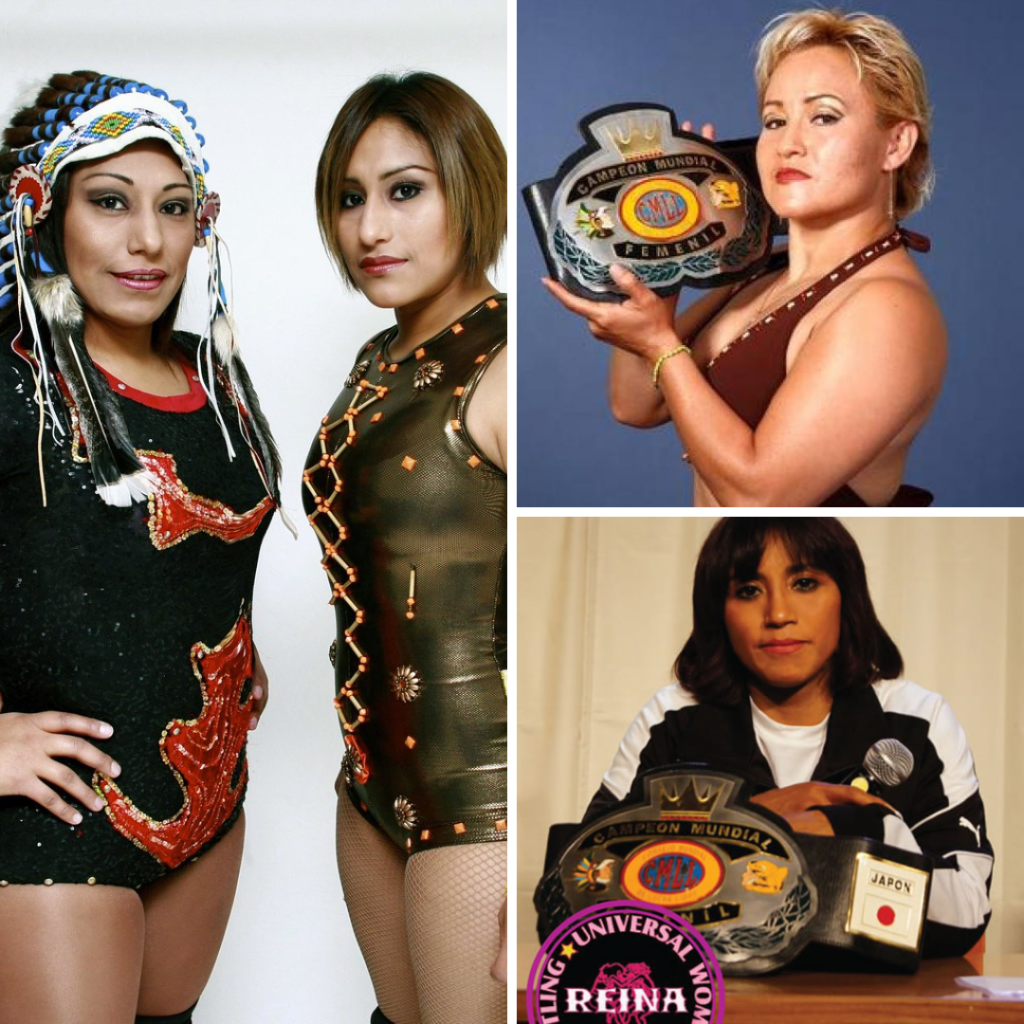
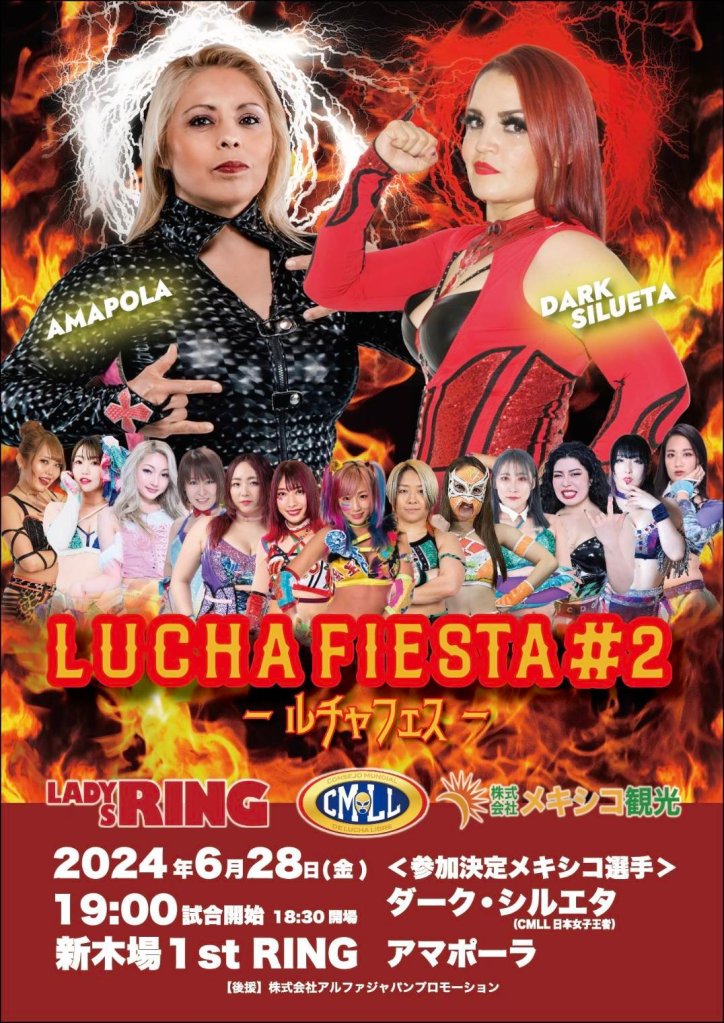
From 1999 to recent times, CMLL longtime standouts Marcela and Amapola had various tours in Japanese promotions like BJW, ARSION, and REINA.
Modern Times
REINA and CMLL had a partnership to promote women’s wrestling in both countries, with several championships created during that time. Dark Silueta has been one the standouts of this partnership, winning the CMLL-REINA International Junior title three times and the REINA World Tag Team championship one time with Syuri. She’s had several runs in Japan from 2011 to date, with the most recent one occurring as of the time of this writing.
In the mid 2010’s, Stardom featured various Mexican wrestlers at their shows like the aforementioned Apache sisters, Thunder Rosa, Goya Kong, and Star Fire, with the latter capturing the High Speed title. Fun fact: Mexican male wrestlers Dr. Wagner Jr. and El Hijo de Dr. Wagner Jr. would also wrestle several matches for Stardom between 2014 and 2018, facing and teaming with the women on the roster.
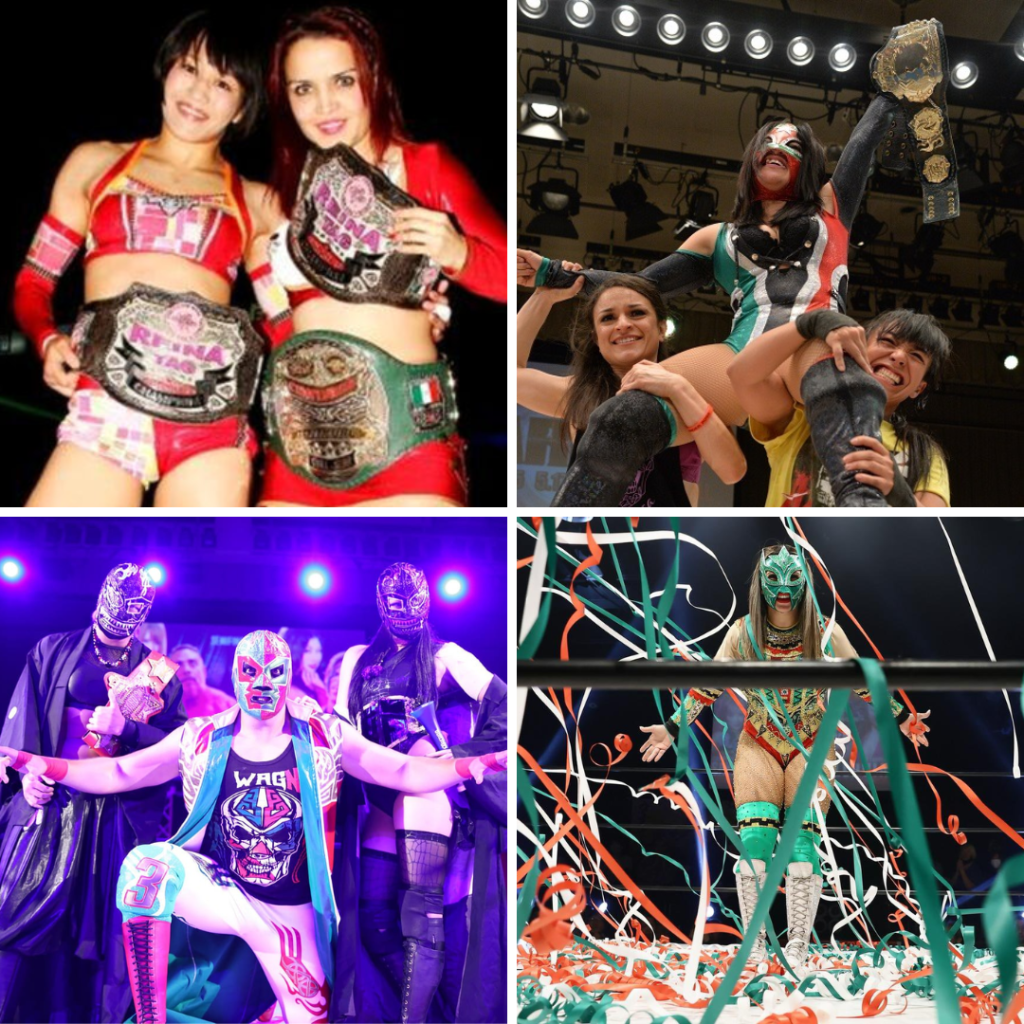
Since the late 2010’s, more and more luchadoras have been touring Japan. Wrestlers like Lluvia and Jarochita have been represented CMLL in Japanese promotions like Sendai Girls and Ice Ribbon, while Tabata, Lluvia’s daughter recently appeared in Stardom challenging Rina for the Future of Stardom title.
Since 2024, there have been a series of shows called “Lucha Fiesta”, which, in similar vein to Fantasticamania, is a Mexican-themed event featuring talent from both countries. The CMLL-Japan Women’s title has been defended in three of the four events so far, changing hands on two occasions, with Lluvia being the current champion.
We are fortunate enough to have lucha libre and puroresu not only combining these two wrestling styles but also uniting two whole cultures.

 RESURA